Hobbies, Stimulation, and Mental Health: A Video Gamer's Perspective
Why Video Games Help (and Hurt) Your Mental Health, According to a Therapist
By Rustin Foster, LCSW | August 1st, 2026
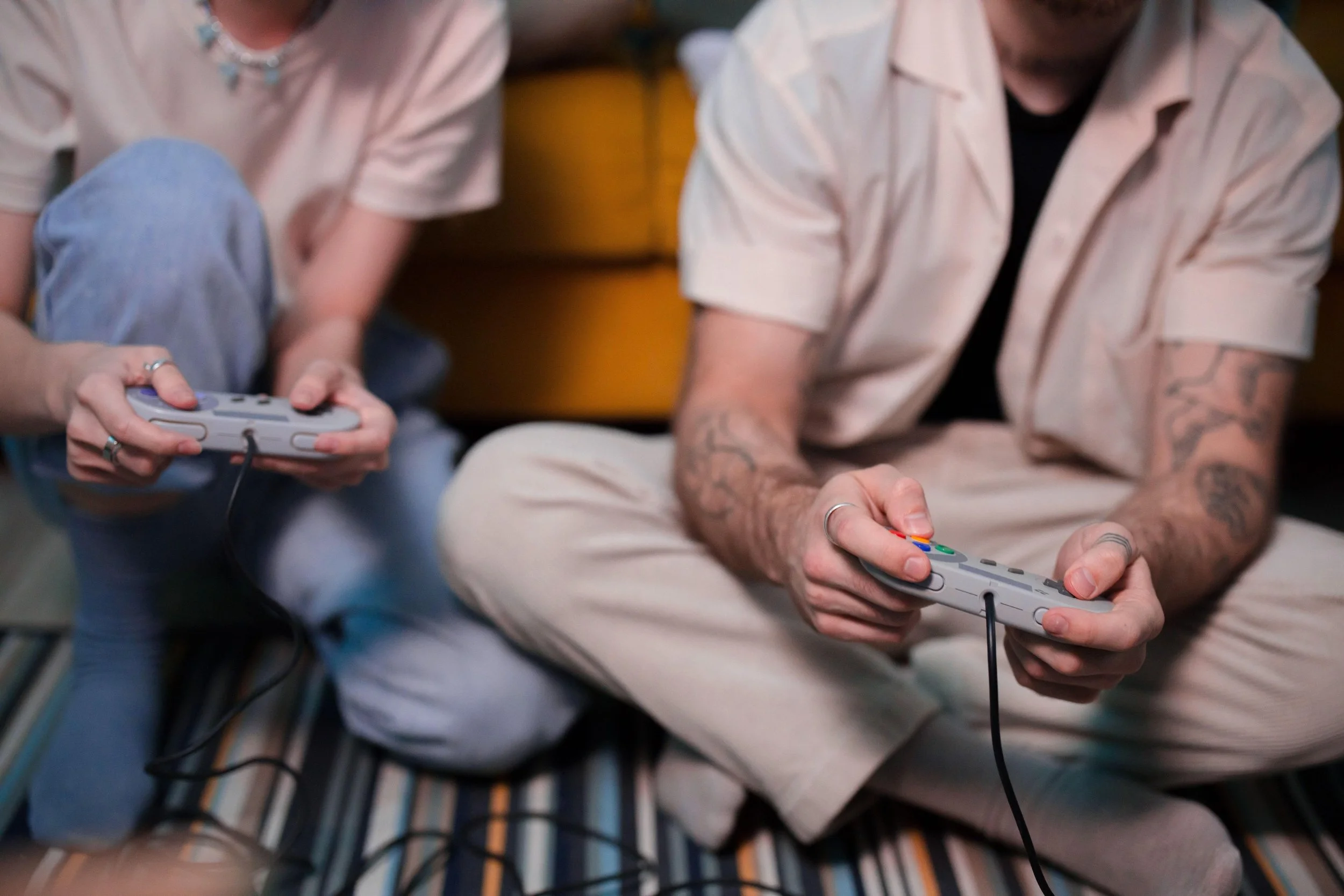
Therapists who work with neurodivergent populations talk a lot about stimulation. Pop culture is well-informed that autistic people engage in stimming or that people with ADHD seek out novelty. We recognize these needs in specific populations, but we can expand our understanding of stimulation much further. All of us rely on meaningful cognitive stimulation as a resource that supports our mental well-being.
One of the primary ways we meet that need is through our hobbies.
For many people, including many of my clients, that hobby is video games.
Many of my clients identify as gamers. Sometimes gaming is a core hobby, and sometimes they tell me it has become their only coping skill. They recognize the immersive nature of modern video games as a way to escape reality. While that can certainly happen, I think our conversation about gaming has become too focused on avoidance and not focused enough on what games actually provide.
My generation has proudly reclaimed video gaming from the voices of our parents who proclaimed it a wasteful, lazy endeavor. Back in the '90s they said it would rot our brains. Boy, did they not foresee the advent of short-form video content.
As we reclaim gaming for ourselves, I think it's time to move beyond the idea of video games as simply avoidance or escape. We should also be talking about the good things games give us: curiosity, challenge, problem-solving, emotional investment, and, perhaps most importantly, cognitive stimulation.
Sometimes when a client is "stuck" in life or feeling depressed, I'll ask what games they're playing. They'll tell me they're working toward 100% completion in a popular game. They may spend 100 or even 1,000+ hours on a game rated for 30 hours of playtime. They're often trapped near the end of a natural cycle that everyone experiences, but one that can be especially difficult for neurodivergent brains: eventually, we lose interest in things we enjoy, and it becomes time to move on to the next thing.
The problem usually isn't the game itself. The problem is when we're chasing the feeling the game used to give us.
As children, our tendency to burn through hobbies and games created a dynamic in which our parents were always trying to keep up. Hobbies like video gaming carry a financial cost, so many parents learned to reflexively say "no" when we finished one game and immediately asked for another. We returned to the last game we loved, searching for a new challenge or puzzle. Sometimes we found one. Sometimes we convinced ourselves we had. Anything to avoid boredom, that pervasive state of under-stimulation.
It is this desire to escape boredom pushes us back to the safety of a hobby we know. Paradoxically, returning to what once stimulated us can become the very thing that keeps us under-stimulated.
We return to what is familiar because we know it once worked. We know every puzzle and every enemy encounter and complete challenges from memory rather than discovery. We keep hoping the old experience will feel new again. Sometimes familiarity is comforting, but comfort isn't always the same thing as stimulation.
As adults we have the freedom to decide how our hobbies fit into our lives. However, figuring out how your hobby fits into the rhythm of your day-to-day can also be challenging. It can feel disappointing when you have to put down a game to go to work or do chores. We don't want to let go of the dopamine supply. Our emotional state experiences a kind of shock as it grapples with the reality that the euphoric, properly stimulated state cannot exist in perpetuity.
Lean into that feeling.
Feeling sad that you have to put it down is often a good sign that it can stimulate you when it is time to pick it back up. A hobby that leaves you wanting more is often doing exactly what it's supposed to do.
When I'm trying to determine whether a hobby is still stimulating me, I ask myself a few questions:
How did it feel near the beginning, and how does it feel now? Is this the same experience?
Am I engrossed in the story as it unfolds, or can I quote every line?
Do I have to think in order to solve challenges, or am I acting from memory?
Do I daydream about what might happen the next time I play?
Does the experience still provoke an emotional reaction?
Do I skip all the cutscenes?
Do I have unpleasant dreams about being stuck in the same gameplay loop, desperately trying to press the correct sequence of buttons faster?
No matter what your hobbies are, consider the practice of letting go when it's time. If you find that practice distressing or intolerable, you may even benefit from therapy to explore the reasons why. You cannot escape the reality that if your brain is wired to appreciate novelty and new experiences, the path forward eventually leads through new content.
Sometimes moving on requires grieving.
That's okay. Letting go of a game doesn't diminish what it gave you. In many ways, it's because it meant something that it's difficult to leave behind. By allowing yourself to grieve the end of one experience, you acknowledge its value while making room for the next one. You're sending your brain an important signal: it's time for a new quest. Whether that's the next game, book, movie, puzzle, or hobby, you're opening yourself to being genuinely stimulated again rather than trying to recreate a feeling that has already passed.
The beginning has always been part of the journey. Sometimes the healthiest thing we can do is grieve the end so we're ready to start again.